By Tangqing Zhang
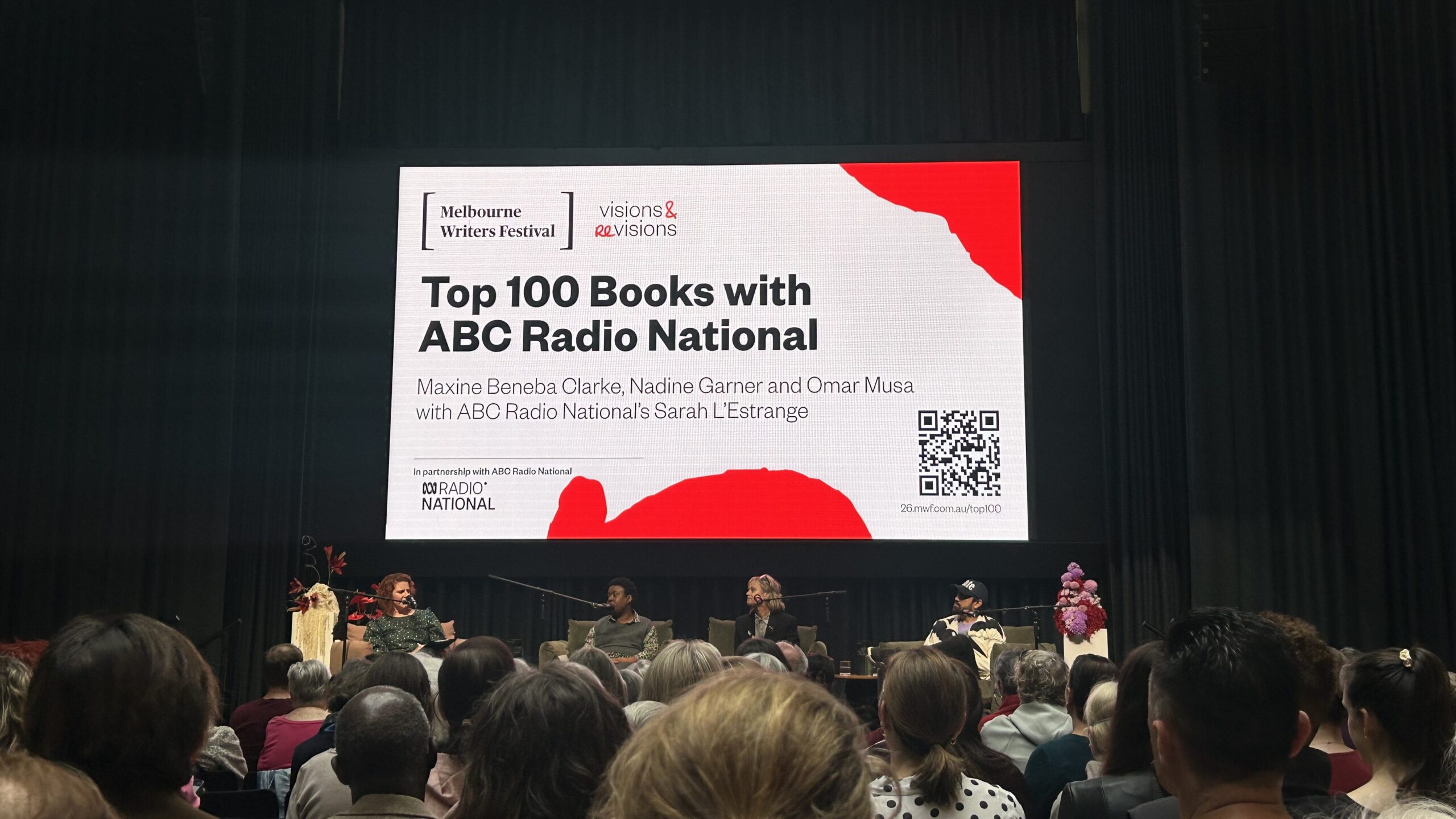
It was 10:30 on a cold Melbourne morning. The queue outside the State Library of Victoria already went down the stone steps. A woman in front of me kept warming her hands around a takeaway coffee cup. A gentleman behind me was flipping through a paperback with so many tabs that the pages looked swollen.
The workshop was called Top 100 Books with ABC Radio National.
I was quite excited when I first came in; however, after staying a while, I realised it was less like a technical ranking and more like listening to people explain what books had quietly shaped them.
Inside the workshop hall, writers and hosts argued over which books deserved to last. The scene was quite impressive. Some writers defended contemporary Australian fiction like their lives depended on it, while others made the case for classics, saying that surviving for so long was proof enough.
From what I observed, there was a certain literary intensity in the room. Each comment carried the quiet confidence of someone who had spent years underlining margins, folding page corners, and slowly learning how to think through books. It reminded me that literature isn’t just a subject or a hobby. Reading is how you build yourself.
Sitting in Melbourne and listening to strangers passionately defend novels that changed their lives, I realised how much my understanding had shifted. Literature didn’t feel so distant anymore.
Maybe that’s what moved me most about that event. Everyone in the room seemed to have a private relationship with books that went beyond grades, productivity, or showing off how smart you are. In universities, reading often gets reduced to extraction: themes, symbols, quotes, arguments. At one point, a speaker talked about rereading a favorite novel during a time of grief. The audience got really quiet. That’s when it hit me: the “Top” books are rarely the most technically perfect ones. They’re the ones that show up at the right emotional moment. They say what you can’t say yet.
As an international student studying creative writing, I often think about the strange tension between reading to survive and reading to transform. A lot of us read strategically now. We read to get a job, to write essays, to understand industries, to stay competitive in an uncertain future. But events like this remind me that reading also has a slower, almost rebellious side. It felt strange seeing people sitting still for that long just to talk about novels.
Walking out of the State Library afterwards, I watched people disappear into the afternoon with newly recommended books under their arms. The city itself seemed softer for a moment, touched by literature. Trams rattled past. Rain gathered on the pavement. Conversations about novels kept going at traffic lights and in café doorways. Maybe books matter because they let you live, for a while, outside the small pressure of your own life.
I still do not know what my own Top 100 books would be. But walking out of the library, I understood why people keep making these lists.
They are not only ranking books.
They are trying to remember who they were when they read them and who they became because of them.
Author Bio:
Tangqing Zhang is a bilingual writer based in Meanjin/Brisbane. She is currently a final year Creative Writing student at Queensland University of Technology. Her work explores a sense of belonging, cultural identity, environmental memory across Chinese and Australian contexts. Her writing has appeared in Overland, and she was shortlisted for the 2025 Roly Sussex Short Story Competition.